Phishing simulations have become a staple of modern security awareness programs. They help organizations understand who clicks, who reports, and where risk exists across the workforce.
But there’s a growing realization across the industry: identifying risk doesn’t automatically reduce it.
Too often, phishing failures are treated as the finish line instead of the starting point. A user fails a test, the result is logged, a score changes… and then nothing meaningful happens. The data exists, but behavior doesn’t change.
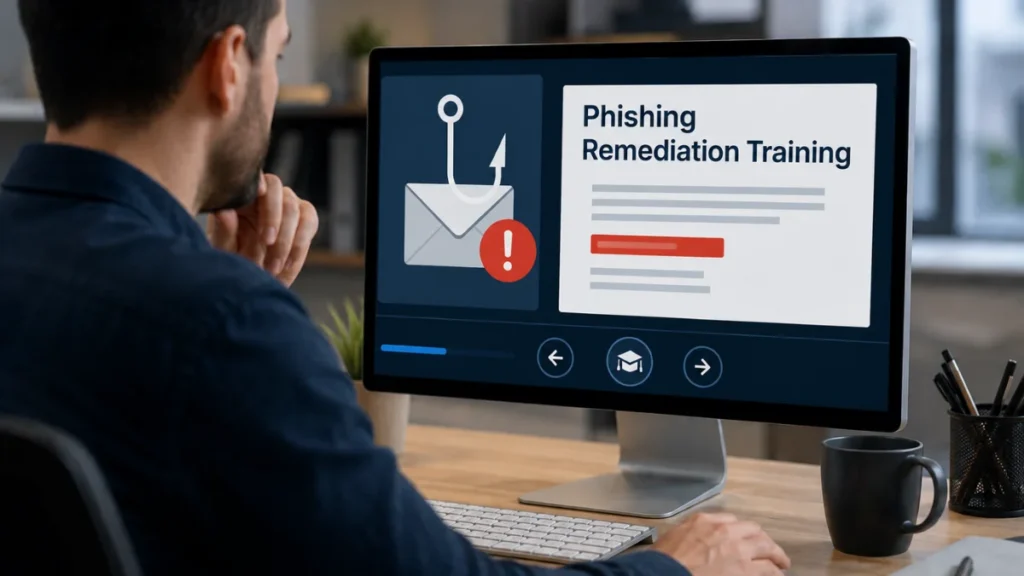
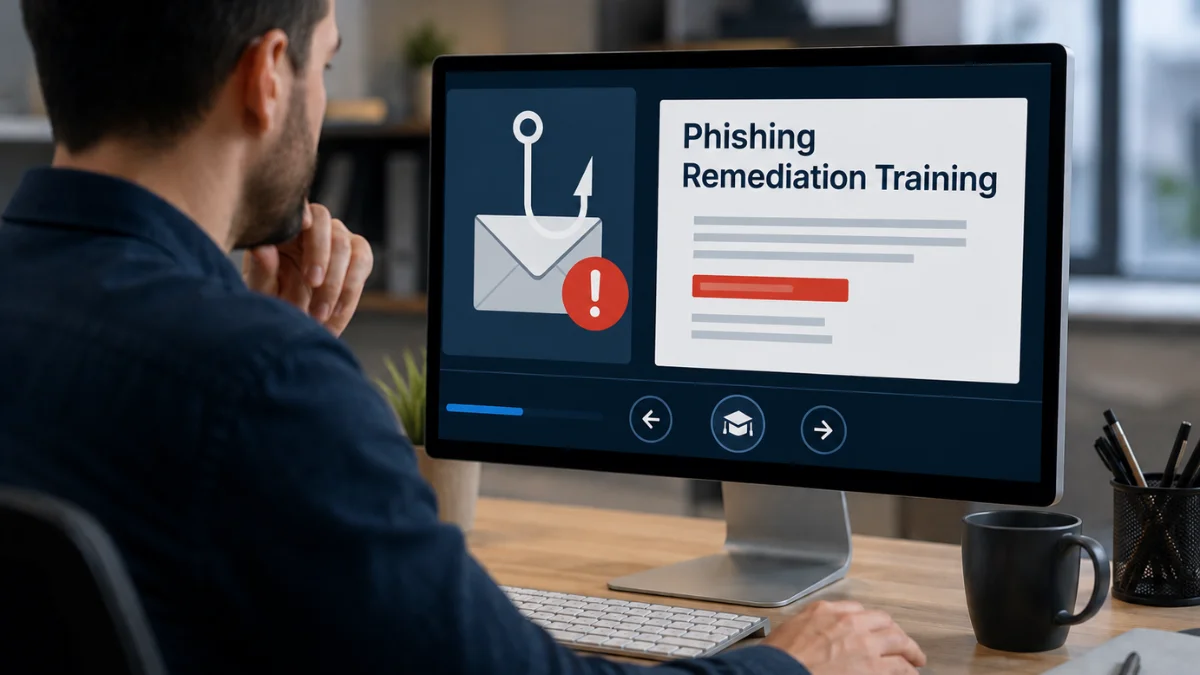
That’s where phishing remediation comes in.
The Problem With “Test and Report” Security Awareness
Phishing simulations are powerful, but on their own they create a gap:
- Users fail, but don’t always understand why
- IT teams see metrics, but can’t easily drive improvement
- Organizations track clicks, but struggle to measure progress
Without a structured response to failure, phishing tests become a compliance exercise rather than a risk-reduction strategy.
The real question organizations should be asking isn’t: “Who failed the test?”
It’s: “What are we doing to help them improve?”
Read more: AI-Assisted Phishing Is Changing the Game, and Traditional Awareness Training Isn’t Enough
Why Remediation Matters More Than Ever
Human risk is dynamic. Employees don’t fall neatly into “secure” or “insecure” categories. They learn, forget, improve, and make mistakes.
Effective security awareness programs acknowledge that reality by:
- Providing immediate feedback when mistakes occur
- Reinforcing learning at the moment of failure
- Encouraging accountability without fear or punishment
Phishing remediation shifts the focus from blame to growth. It treats failures as teachable moments rather than permanent marks against an employee.
That mindset doesn’t just improve outcomes, it improves security culture.
Read more: Why Continuous Training Beats One-and-Done Cyber Awareness
From Awareness to Action
The organizations seeing the most success with phishing simulations are those that close the loop between:
- Testing (identifying risky behavior)
- Training (correcting it)
- Measurement (tracking improvement over time)
Remediation is what turns awareness into action. Instead of static reports, organizations gain:
- Clear paths to improvement
- Measurable progress
- Employees who understand expectations and feel supported
In a threat landscape where phishing continues to evolve, the ability to adapt and improve behavior matters more than ever.
The Future of Phishing Defense Is Behavioral
Technology will always play a role in stopping phishing emails. But when it comes to human risk, the goal isn’t perfection, it’s progress.
Phishing remediation represents a shift in how organizations think about security awareness: Not as a series of tests, but as an ongoing process of learning and improvement.
Because the most resilient organizations aren’t the ones that never fail phishing tests, they’re the ones that learn from them fastest.
At Breach Secure Now, we’re continuing to invest in this shift. Phishing Remediation Training is coming soon, designed to help organizations turn phishing failures into guided learning moments with measurable improvement over time.