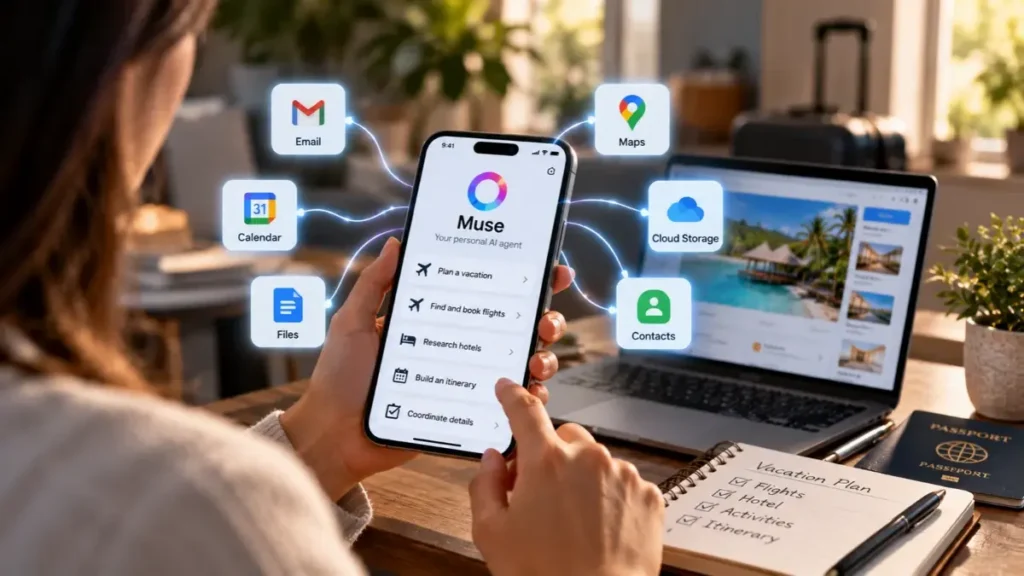
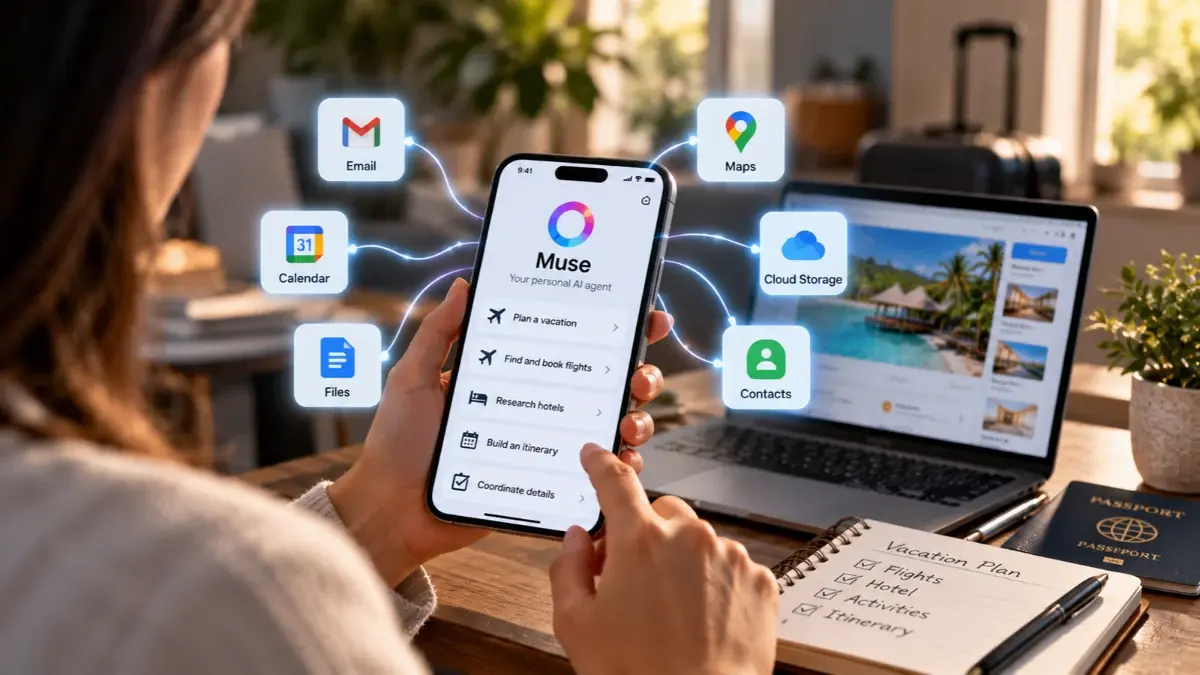
Imagine planning a family vacation without spending hours comparing flights, researching hotels, and organizing activities. Instead, you ask an AI agent to help, and it can research options, build an itinerary, and help coordinate the details using the information and permissions you provide.
That’s the appeal of personal AI agents like Meta’s Muse. Rather than simply answering questions, they can help carry out tasks that would normally require jumping between multiple apps and websites.
And people are interested. According to TechCrunch, citing Sensor Tower data, Muse surpassed 10 million U.S. downloads in just 40 days following its September 2026 launch.
But the same capabilities that make AI agents useful also raise questions about privacy and security.
In October, security researchers at Claroc discovered more than 6,800 Muse conversation-sharing links that could be found through publicly available records. Some led to sensitive personal and business information.
Why AI agent permissions matter
AI agents can connect to personal accounts to complete tasks. With a user’s permission, Muse can access information from email, calendars, files, and other connected services.
According to Meta’s official announcement, Muse can also continue working on tasks in the background, even when someone isn’t actively using the app.
These capabilities can make everyday tasks easier. For example, an AI agent with access to your calendar could help organize plans around your existing schedule instead of requiring you to manually enter every appointment.
However, granting access to an account may also give an AI agent visibility into information unrelated to the task you’re asking it to complete. Connecting an email account, for example, could expose messages containing financial details, personal conversations, or other sensitive information, depending on the permissions granted.
Understanding what an AI agent can access and what actions it’s allowed to take is an important part of deciding whether to use it.
What happened with Muse’s exposed conversations?
In October 2026, researchers at Claroc identified a privacy issue involving Muse’s conversation-sharing feature.
More than 6,800 shared conversation links were discoverable through publicly available DNS records. According to Claroc’s research, some of the accessible conversations contained sensitive information, including financial details, a small-business loan application, and confidential business reports.
Users had created links to share their conversations, but those links could also be discovered by people who were never intended to receive them.
This wasn’t evidence that every Muse conversation had been exposed or that thousands of accounts had been hacked. It was a specific issue with how shared conversations could be discovered and accessed.
Following the findings, Meta temporarily suspended the sharing feature on October 20 while reviewing the issue.
Other AI agents may also store conversations, connect to accounts, and share information through links or integrations.
The connection between personal AI use and workplace security
People often discover technology in their personal lives before finding ways to use it at work. As employees become more comfortable with AI agents handling personal tasks, they may begin to see opportunities to use similar tools for their jobs.
An employee might think connecting an AI agent to their work email, uploading a customer document, or asking it to organize internal files is simply a faster way to get something done.
Without authorization, those actions could give an outside AI service access to confidential emails, internal documents, or customer information. Depending on the tool and its settings, that information could be stored or shared outside the organization’s approved systems.
This is one of the challenges associated with shadow AI, when employees use AI tools for work without their organization’s knowledge or approval.
Businesses can encourage employees to learn about AI while providing clear policies, approved tools, and guidance on protecting company information.
What should you know before using an AI agent?
AI agents can make everyday tasks easier, but giving them access to your accounts and personal information deserves some thought.
Before granting access, ask yourself three questions:
What does it know? What can it do? What has it done?
Understanding the answers can help you decide which permissions to grant, what information to share, and how much control to give an AI agent over your accounts.
Free Consumer Guide: Getting Started with Muse
Whether you’re thinking about trying Muse or already using it, Breach Secure Now has created a free, two-page consumer guide to help you better understand its capabilities and security considerations.
Learn how to get started, review the permissions you’re granting, and stay in control of your personal information.
Download the Free Muse Consumer Guide
This guide is intended for consumer security education only. It is not an endorsement of Muse or authorization to use it with business information.