October is Cybersecurity Awareness Month, but awareness alone doesn’t make an organization secure.
Businesses also need to turn that awareness into action.
One of the most valuable lessons organizations can reinforce this month is that cybersecurity works best in layers. To support those conversations throughout October, Breach Secure Now has prepared a Cybersecurity Awareness Month Toolkit with resources MSPs can use to engage and educate their clients.
No single security control can stop every threat. Passwords can be compromised. Employees can make mistakes. Technology can fail. Attackers can find new ways around existing protections.
The question businesses should ask during Cybersecurity Awareness Month isn’t whether they have one defense in place.
It’s what happens when that defense fails?
Download Your 2026 Cybersecurity Awareness Month Marketing Toolkit
Build Beyond the Password
During the first week of BSN’s Lock It Down Cybersecurity Awareness Month theme, we focused on strong, unique passwords.
That’s the starting point. Now it’s time to add another layer.
A password can help prevent unauthorized access to an account. But if that password is stolen or exposed, relying on it alone creates a single point of failure.
Multi-factor authentication, or MFA, adds another form of verification.
That additional requirement can help protect an account even if an attacker obtains the password.
With our Lock It Down theme, we compare that to adding a deadbolt.
The first lock still matters. The deadbolt doesn’t replace it. It strengthens it.
Layered Security Is a Strategy, Not a Product
It’s easy to think about cybersecurity in terms of individual technologies.
Do we have MFA?
Do we have a password manager?
Do we have security awareness training?
Those are useful questions, but organizations should also ask how those protections work together.
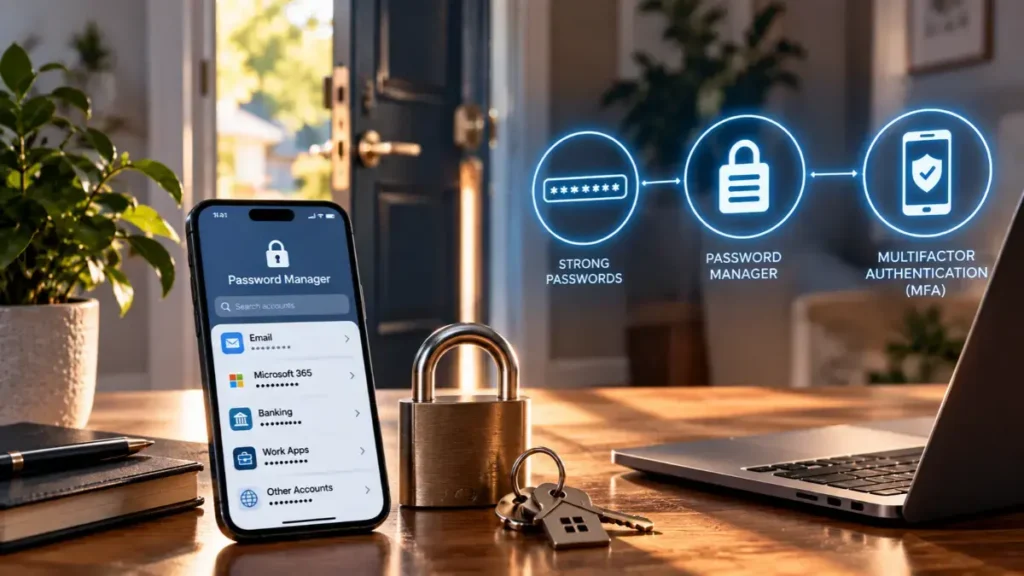
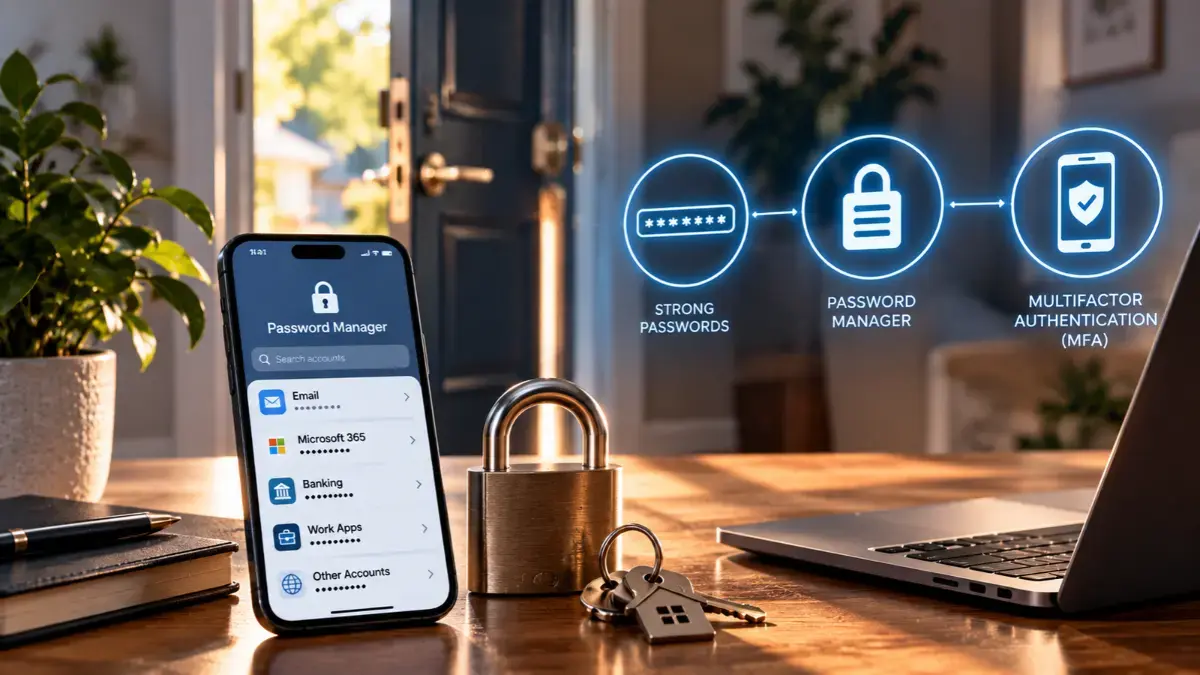
Employees need strong, unique passwords. A password manager can make managing those credentials easier. MFA adds another authentication requirement so that obtaining the password alone may not be enough.
Employee training helps people understand why those protections matter and how to use them correctly.
Each layer addresses a different part of the problem. Together, they create something stronger.
Technology Still Depends on People
Cybersecurity Awareness Month is also a good time to remind employees that security technology isn’t automatic protection.
Consider MFA; Employees may become accustomed to approving authentication prompts throughout the workday. But an unexpected MFA request can be a warning sign.
If an employee receives a login request they didn’t initiate, approving it just to clear the notification can undermine the protection MFA was designed to provide.
Employees need to recognize that something unusual is happening and know what to do next.
That is why cybersecurity awareness and security technology should support one another.
The technology creates another barrier. The employee understands how to use it.
Make Security Easier to Follow
Adding security controls without considering the employee experience can also create problems.
When security becomes unnecessarily difficult, people look for shortcuts.
Cybersecurity Awareness Month gives organizations an opportunity to examine security from the employee’s perspective.
Do employees understand why MFA is required?
Do they know what to do with an unexpected authentication request?
Do they have a secure way to manage numerous passwords?
Do security processes make the secure choice practical?
The goal shouldn’t simply be adding more security.
It should be creating layers employees can actually use effectively.
Give Clients Something to Think About This October
For MSPs, Cybersecurity Awareness Month provides a reason to move beyond product-level conversations and talk with clients about their broader security strategy.
Ask what happens when one layer fails.
If a password is compromised, what happens next?
If an employee receives a suspicious authentication request, will they recognize it?
If employees are expected to use unique passwords, do they have the tools to manage them?
Where are the organization’s single points of failure?
These conversations help turn Cybersecurity Awareness Month into more than an educational campaign. They can help clients identify opportunities to strengthen their actual security posture.
Add the Deadbolt
This week’s theme in BSN’s Lock It Down campaign is simple: Add the Deadbolt.
A front door with one lock is better than an unlocked door.
A door with another layer of protection is stronger.
The same principle applies to cybersecurity.
This Cybersecurity Awareness Month, encourage clients to look at how their defenses work together rather than relying on any single security control.
Lock the door. Add the deadbolt. Build security in layers.