If there’s one phrase echoing across the industry right now, it’s AI. At every conference, in every keynote, and across every vendor booth, the chorus is the same: AI is transforming everything. But while many voices are focused on automation, workflows, agents, and the technical wizardry behind the scenes, there’s a critical layer that often gets overlooked: the human layer of AI adoption.
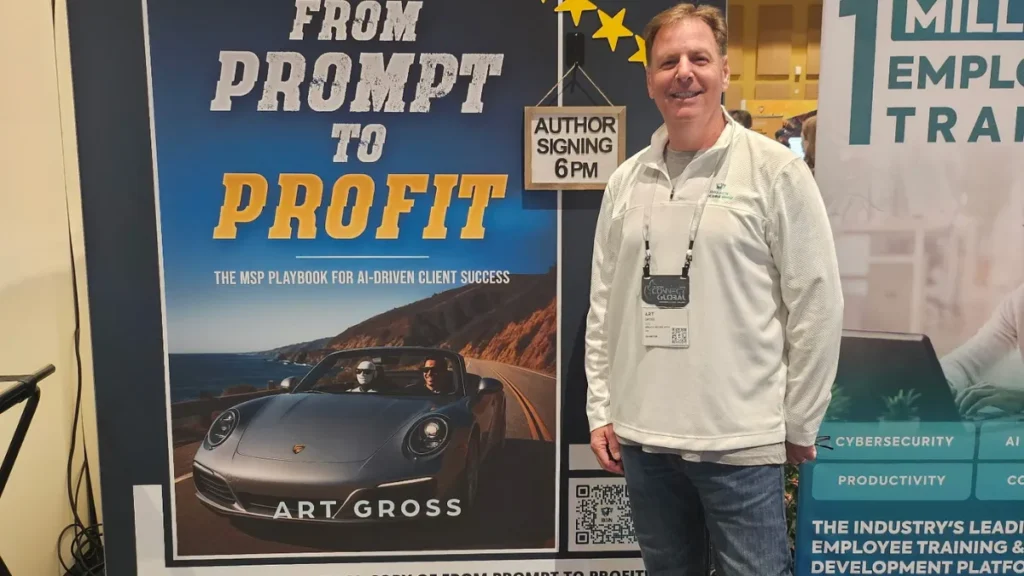
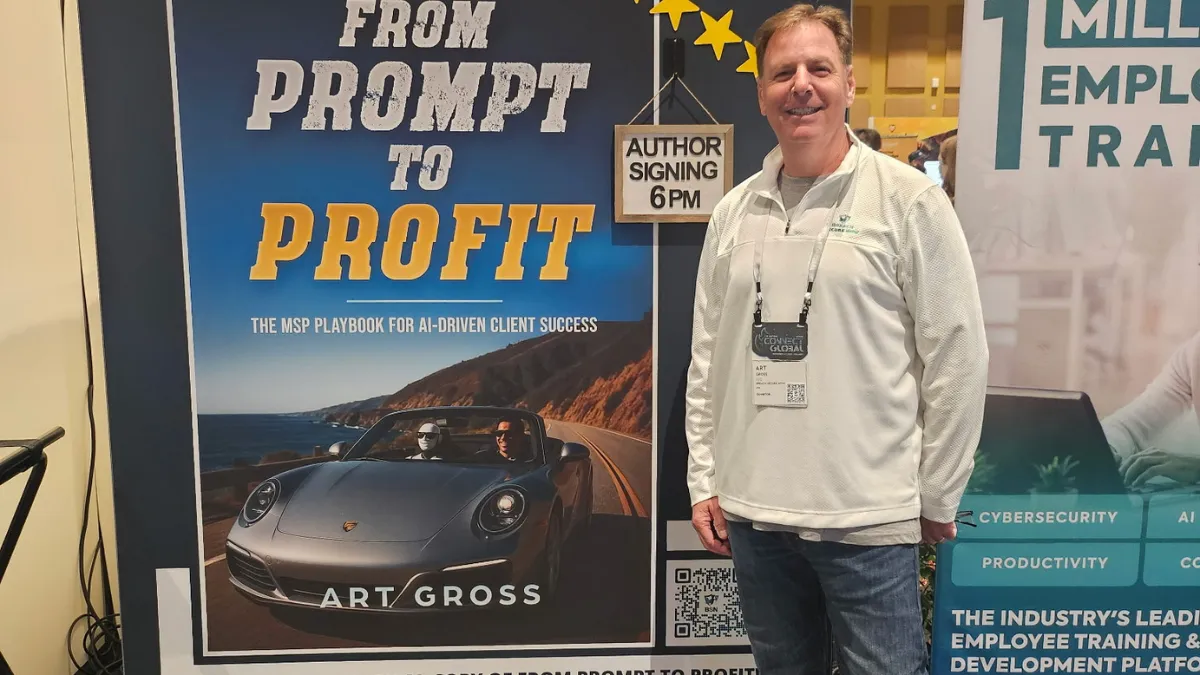
This was the core message delivered by Art Gross, CEO of Breach Secure Now, and longtime MSP owner, during his breakout session From Prompt to Profit at the recent IT Nation Connect 2025 event in sunny Orlando, Florida. The message is both simple and urgent: MSPs are uniquely positioned to lead small and mid-sized businesses (SMBs) into AI safely, strategically, and successfully. But only if they start now.
MSPs Have Seen This Story Before
MSPs have always been the bridge between complicated innovation and everyday business use. Over the past 25 years, MSPs helped customers navigate the rise of the internet, email, mobile computing, cloud transformation, compliance requirements, and the ever-growing cybersecurity landscape.
Each time, clients felt some combination of fear, excitement, and confusion; and each time, MSPs played the translator, protector, and trusted guide.
AI is no different.
AI is advancing faster than any technology that has come before it. Over 800 million people use ChatGPT every week, making it the fastest adoption curve in tech history. Whether business leaders realize it or not, their employees are already bringing AI into the workplace; sometimes in risky ways.
And that is where today’s biggest opportunity emerges.
Shadow AI: The New “Dark Web Moment” for MSPs
One of the most compelling themes discussed in Art’s breakout session was shadow AI. If shadow IT was the quiet, unauthorized spread of apps in the early cloud era, shadow AI is the modern version, except bigger, faster, and riskier.
Employees are using free public AI tools like ChatGPT, Gemini, or Claude to make their jobs easier. But often, they’re inadvertently pasting:
- Client Lists
- Proposals
- Contracts
- Pricing Sheets
- Proprietary IP
- Sensitive or Regulated Data
All into public models where the data may be retained or used for training.
We’ve spent a decade securing networks from external attackers, yet now employees may be exposing sensitive data simply because AI tools are so accessible and helpful.
This is the perfect entry point for MSPs.
Much like dark web scans helped MSPs start cybersecurity conversations years ago, shadow AI reporting allows them to start the AI conversation today:
“Here’s what tools your employees are using. Here’s the risk. And here’s how we help you fix it.”
This is familiar positioning: risk, education, policies, controls, and MSPs already know how to deliver it.
Helping Clients Implement AI Safely and Securely
After raising awareness, the next opportunity lies in guiding clients through safe, strategic AI adoption.
While many assume Microsoft Copilot will be the de facto standard, reality is more fragmented. Different employees and departments will gravitate toward different tools. Sales teams may prefer one model, marketing another, operations a third.
Clients need help answering basic but critical questions:
- “How do we configure them securely?”
- “How do we integrate AI with our existing systems like M365, Salesforce, or HubSpot?”
- “What are employees allowed—and not allowed—to do with AI?”
This mirrors what MSPs already do for Microsoft 365. MSPs don’t write Excel formulas for clients, they deliver licensing guidance, configuration, policies, training, and support.
AI adoption requires the same motion.
In fact, MSPs don’t need to be automation experts to provide value today. Automations and advanced workflows will come later. Right now, the real opportunity is simple:
Help clients onboard AI tools safely and help their employees use them effectively.
The Cultural Side of AI Adoption
Beyond technology, Gross emphasized a neglected but critical part of adoption: AI culture.
Employees everywhere are feeling uncertain, some even fearful. Headlines about AI replacing jobs feed anxiety. Many users feel unprepared or undertrained. Others are hesitant to experiment because they worry about making mistakes or violating policy.
MSPs can help reshape that narrative.
By promoting a culture of curiosity, experimentation, and safe usage, MSPs can empower employees to become “10x versions” of themselves rather than fearing AI as a threat.
Just as MSPs once helped build a culture of cybersecurity awareness, they can now help build a culture of AI acceptance and responsible use.
This is not about technology, it’s about people.
Training: The First and Most Profitable Step
Despite millions of employees using AI tools today, only a tiny fraction receive any formal AI training. Most are figuring it out on their own.
This gap presents one of the biggest, most immediate revenue opportunities for MSPs.
AI training can cover:
- Safe vs. Unsafe Prompts
- Data Handling Guidelines
- Effective Prompting Techniques
- Model Limitations and Hallucinations
- When to Use Internal vs. External Tools
- How to Leverage AI for Productivity
And because AI tools evolve weekly, training must be recurring, making it a strong MRR generator.
In his presentation, Gross compared this to early cybersecurity services, where employee training was the gateway that led to larger projects: MFA deployments, EDR rollouts, compliance add-ons, SIEM/SOC, and more.
AI training will open the door to AI policy creation, tool selection, pilot programs, implementations, and eventually automation services.
But training is step one.
Why Waiting Is Risky: The Rise of AI Consultants
Gross issued a clear warning: the AI gold rush has already begun.
Just as EHR consultants once became the strategic voice in healthcare IT implementations – pushing MSPs into the background—AI consultants are emerging today. They’re targeting SMBs directly, selling basic automations, workflow optimization, and AI strategy.
They don’t want to replace the MSP’s helpdesk.
They want to replace the MSP’s strategic influence.
If MSPs don’t step into the AI conversation soon, someone else will.
And once an outside consultant becomes the client’s strategic AI advisor, the MSP risks becoming a secondary vendor rather than a primary partner.
The Action Plan for MSPs
Gross outlined a practical, achievable roadmap for MSPs looking to seize the AI opportunity:
Show, don’t tell. Use AI in your own operations across sales, finance, helpdesk, onboarding, documentation, and processes. Your internal use cases become your strongest sales stories.
- Launch AI Training Services
Introduce shadow AI awareness, safe usage guidance, and productivity training. Position it as foundational and ongoing.
- Help Clients Build AI Acceptable-Use and Security Policies
Policies must evolve at the pace of AI change, creating recurring engagements.
- Offer AI Foundational Services.
Tool selection, configuration, integration, and support similar to the Microsoft 365 model.
- Guide Clients Through Department Pilot Programs.
Show ROI early and often. Once clients see value, the demand for deeper services follows naturally.
MSPs Are Perfectly Positioned If They Act Now
The AI revolution isn’t coming—it’s here. Employees are already using the tools. Competitors are already approaching your clients. And SMBs desperately need a trusted guide.
MSPs own the client relationship. They understand business workflows, data access, user behavior, and security requirements better than anyone else.
Now is the time to step into the role of AI advisor.
Start with training. Grow into policy development, safe implementation, and ongoing support. Build your internal competence and use your own AI use cases as proof. Most importantly, give your clients a reason to say:
“No thanks—our MSP is already handling our AI strategy.”