Tax season can be stressful. From filing to paying taxes, Americans have enough to worry about this time of year without adding identity theft and refund fraud to the equation. Unfortunately, tax scams have become so common in today’s world that not considering ways to protect yourself from tax scams would result in more stress, money and time spent during this busy time of year. An article over on Wired provides some great details on tax scams and what to look for when trying to spot one.
First it is important to discuss how a tax scam works. There are a number of different methods criminals use to trick their targets into falling victim to a tax scam. One tactic is for a criminal to impersonate the Internal Revenue Service. Using this method, the scammer threatens the victim into disclosing financial information and/or sending money to them through a wire transfer. Some criminals also collect their victim’s personal information, including their Social Security numbers through large data bases, giving them the information they need to file an individual’s tax return and thus, claim their refund. While criminals utilize various additional methods, this year there has been a dramatic increase in hackers targeting individuals who store all of their financial information in one location.
This isn’t small stuff. Tax fraud is a multi-million dollar industry in the US alone.”
In 2016, tax-related phishing and malware attacks were greater than ever, with the IRS reporting a 400% increase over the previous year.
In all, the IRS’s scanning systems stopped more than $6.5 billion in fraudulent refunds from being paid out in 2016 for 969,000 tax returns filed by identity thieves.”
It is evident that tax fraud is alive and growing. Looking at this year’s totals thus far, the IRS has already flagged 631,000 tax returns for being potentially fraudulent, totaling around $4.7 billion in refunds. IRS Commissioner John Koskinen explained to the Senate Finance Committee last week that criminals are catching on to the filters put in place by the IRS to detect fraudulent returns, resulting in hackers becoming more sophisticated in their attempts to obtain another individual’s refund.
Although the IRS is taking measures to decrease the amount of fraudulently filed tax returns, there is still a lot of work to be done.
The agency could implement more anti-fraud authentication measures, like offering each person a tax ID filing PIN that changes each year.”
While tax fraud can often be avoided through education on what to look for and by staying informed, it is not always preventable. Criminals not only target the individual whose information they plan to use, but also organizations or tax preparers who have access to personal information.
For example, recently scammers have been using family data from the federal student financial aid and loan repayment systems to fuel refund fraud.”
Below are some ways to help protect yourself from a tax scam:
Communicate with the IRS
- The IRS never demands payments in a specific way, such as through a gift card or wire transfer.
- The IRS will always give you the opportunity to look over what they’re saying you owe them.
- The IRS will never ask you via telephone to provide your debit or credit card number.
- The IRS will not threaten you with police action.
Beware of Phishing Emails
- Hackers could send you fake emails prompting you to click a link or download fake tax paperwork.
- Hackers could send you fake emails relating to your W-2, making it look like it came from “someone in your company”, such as human resources.
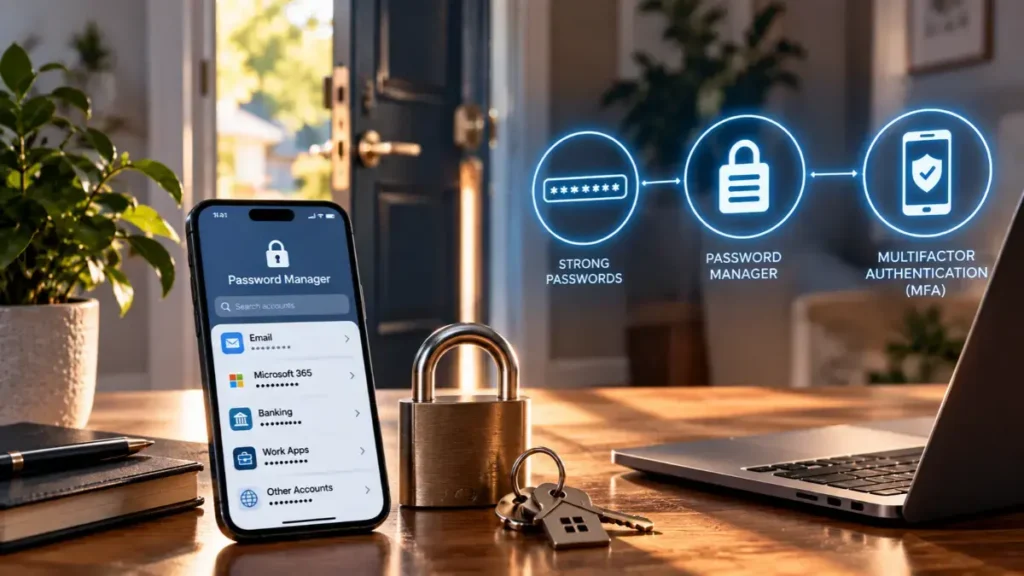
Use Strong Passwords
- Create a strong password for your tax preparation service and make sure you change it every time you file your taxes.
If you do try to file your taxes and discover that someone else has already done it and claimed your rebate, contact the IRS immediately, and then check your credit report.”