
Equifax Breach Update

Made in China
The 2017 Equifax breach brought individuals and one of the largest credit agencies to their knees. And now, over 2 years later, the United States Justice Department has charged four Chinese military officials as responsible parties in the breach.
Words With Friends Hack Could Affect 218 Million Users
I’d Like a Word with You
In fact, I’d like a word with all 218 million of you. Yes, that is the number of users in the popular game Words With Friends, the very one that was allegedly hacked by the Pakistani hacker, who uses the alias Gnosticplayers, on September 2nd of this year. This recent breach is all a part of their announced intent to put data of 1 billion users up for sale. And he/she seems to be making progress because by April, they had reportedly stolen 932 million user credentials from a whopping 44 companies.
Breach Accountability
This week I saw a story link come across my newsfeed to “make sure you get your money from Experian” – it was referring to the compensation being offered as a result of their breach. You could either opt-in for credit monitoring or take the $125 payout.
Regardless of what choice you made if you were affected, what I found interesting was that this was now coming across in the newsfeed of my “friend” group, not my professional feed where I would expect it.
These Numbers Don’t Add Up
If you are management, and your employee came to you with a proposal, you’d likely (hopefully) listen.
What if that employee proposed to you that by keeping business as is, you’d likely lose millions of dollars – and possibly go under? But if you made one small change, you’d increase your odds of staying in business and actually thriving throughout the years – would you listen? I bet you would. I know I would.
The Blame Game
When a breach occurs, after the confusion and panic have passed (or merely settled in), the finger pointing starts. Generally, clients assume that since the anti-virus icon in the corner was there, they were protected. Firewall? Not sure what it is, but I get an alert every now and then about it, so it must be doing something. Passwords? I use them. Sure, they aren’t the most complicated, but c’ mon, why would a hacker want my bank account?
How to Create an Incident Response Plan
Data breaches are extremely common as technology continues to advance. Of those breaches, small and medium-sized businesses (SMBs) are a favored target for cybercriminals.
In fact, more than 70% of attacks target small businesses, according to the National Cyber Security Alliance, and as many as 60% of hacked SMBs go out of business following a data breach.
With the stakes so high, SMBs must be prepared to respond to a data breach in the event one was to occur.
But You Changed Your Password – So How Did This Happen?
Anna Jones is an employee of Your Financial Services, Inc. and has used LinkedIn since 1996. It’s been a great tool for listing her employment history as well as communicating with former colleagues and potential employers to keep in touch. Over the years there’s been a lot of private information exchanged between her and these individuals, including salary ranges and other personal anecdotal information. LinkedIn isn’t her bank account or email, so she just uses her standard “go-to” username and password – the easy one that she knows she won’t forget.
Employees: The #1 Cause of Data Breaches
As the multi-billion-dollar industry of cybercrime continues to thrive, employees remain the number one cause of cyber attacks. Despite cybercriminals relentlessly targeting and attacking organizations of all sizes, employees remain untrained on security awareness, leaving them to fight a battle they’re unprepared for.
Breached Records to Skyrocket with SMBs as the Biggest Targets
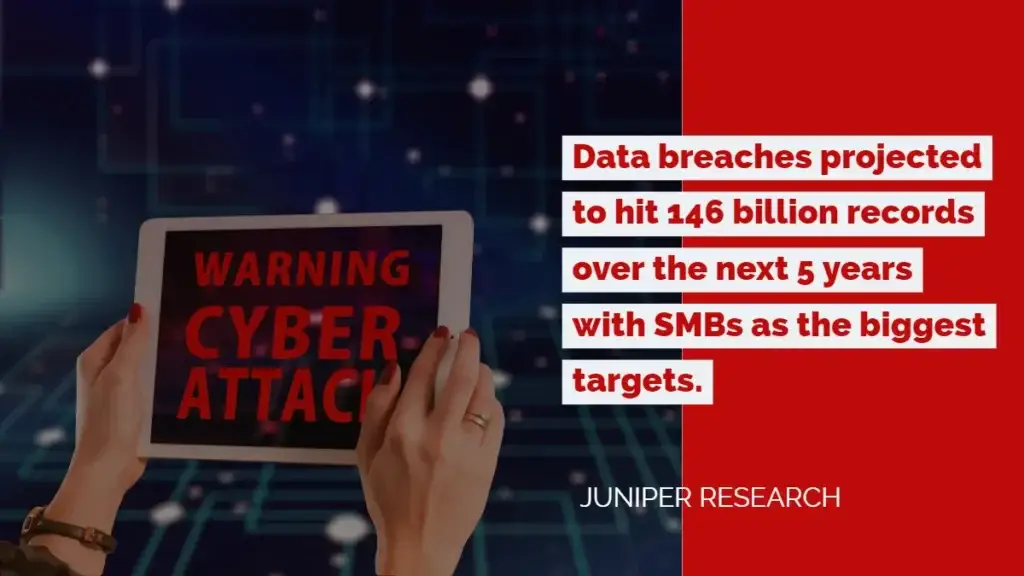
A lot can happen in 5 years, and unfortunately, not always for the better. According to a recent report by Juniper Research, Cybercrime & the Internet of Threats 2018, data breaches are expected to reach 146 billion records over the next five years.
Phone-Based 2FA: Not so Secure After All
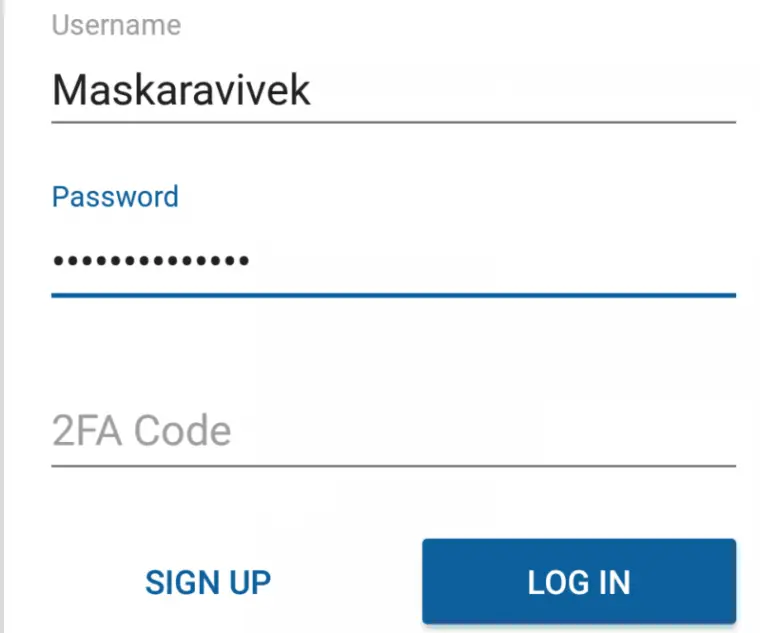
In a time where data breaches have become the norm, there is no such thing as exercising too much caution when it comes to protecting your online assets, including your login credentials and access to accounts. Two-factor authentication (2FA), a method of confirming a user’s identity via combining two factors is widely accepted and recommended by security experts as a necessity for optimum security online. 2FA is a great added security feature to protect your account because an unauthorized individual is unlikely to supply the factors required to successfully gain access.
